ECOARTISAN
Connecting Artists with Resources & Fighting Waste within One App
THE TEAM
I was the lead UX designer on this 13-week university project, focusing on flow and functionality.
Team MatesShrin Roymoulik [Team Lead] Emma Jenkins [UI Lead]
THE STATS
$135-195K est. first year revenue
PROBLEM #1
Many artists struggle to make ends meet
As creatives, we’re intimately aware of how tough it is to ‘make it’ as artists. In 2019, 57% of Canadian artists reported a total income of <$40,000.
One way to alleviate the financial burden is to connect artists with less expensive materials. This led us to the age-old idea: one person’s trash is another person’s treasure...
PROBLEM #2
Huge amounts of reusable materials are discarded daily
In 2022, 26.6 million tonnes of waste entered Canadian landfills. While not all trash is salvageable, we’re willing to bet that a not-insignificant percentage could be rerouted to artists.
How might we connect artists with people offloading unwanted items?
THE SOLUTION
A marketplace for sourcing and transforming unwanted materials into sellable art
Anything from old furniture, to textile off-cuts, to your grandmother’s button collection can be posted for artists to claim.
We looked at two existing buy-sell platforms, Facebook Marketplace and Craigslist, as well as e-commerce sites Threadless and RedBubble
The Opportunity: No platform currently combines material exchange, artist discovery, and upcycled commerce in one ecosystem.
FIRST DEGREE RESEARCH
Artists need support with self-promotion and sourcing materials
We surveyed 19 artists and interviewed 10 independent creators who focus on repurposing materials.
Pain Points
- Sourcing quality materials.
- Difficulty growing their customer base.
- Low social media engagement.
Requested Features
- Artist profiles and honest buyer reviews.
- Local material exchange.
- Marketing support.
“Only 2-5% of my followers engage with posts. This creates a frustrating cycle where I spend hours creating social content that reaches minimal audiences... time that could be spent creating sellable work.” — Local Artist
There is a real need for artists to offload the time and effort they spend trying to grow their client base, and they need better access to reputable material sources. We want to help artists get back to what they do best.
FINANCIAL FEASIBILITY
More bang for artists’ buck than galleries offer
We want the app to be accessible; a freemium subscription lets anyone join, regardless of financial circumstance. Users can pay for unlimited posts with a premium subscription.
The commission charged is less expensive than gallery rates while still offering exposure.
Estimated first year app earnings: $135,000 - $195,000
If there are 1,000 sign-ups in the first year, 500 of which are artists earning $200 monthly:
- 500 artists x $200 per month x 12 months = $1,200,000 total earnings
- EcoArtisan’s 10-15% commission:$1,200,000 x 10% = $120,000$1,200,000 x 15% = $180,000
- If a quarter of users pay for premium:250 users x $5 per month x 12 months = $15,000
THE DESIGN
Designing a quality experience for every user
There are three personas: artists, people offering materials, and people buying art.
Posting Art
Buying Art
Posting Materials
We first considered having users choose a persona during sign-up, however it quickly became clear that categories could easily blend between one another. It added unnecessary friction to separate users.
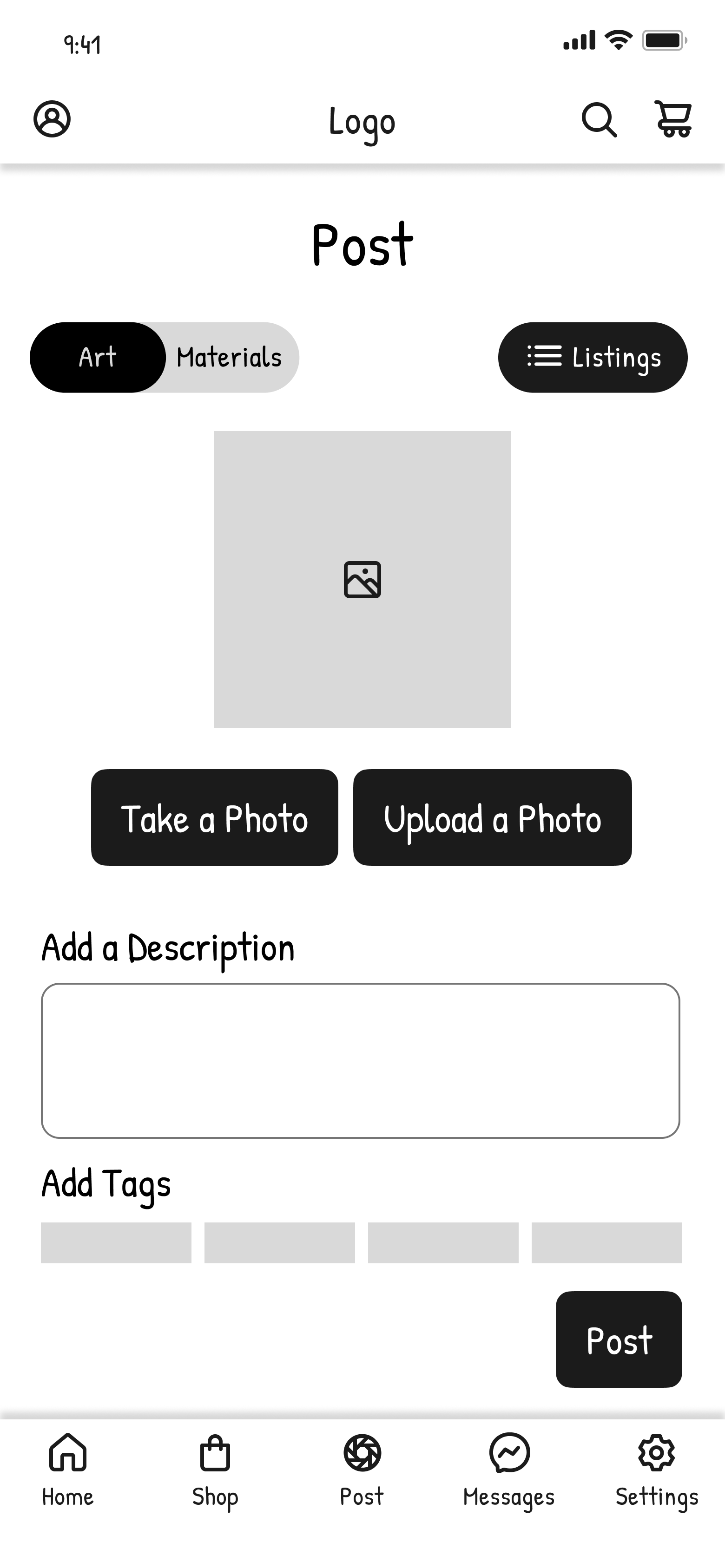
Post and Shop functions have to be accessible to every user.
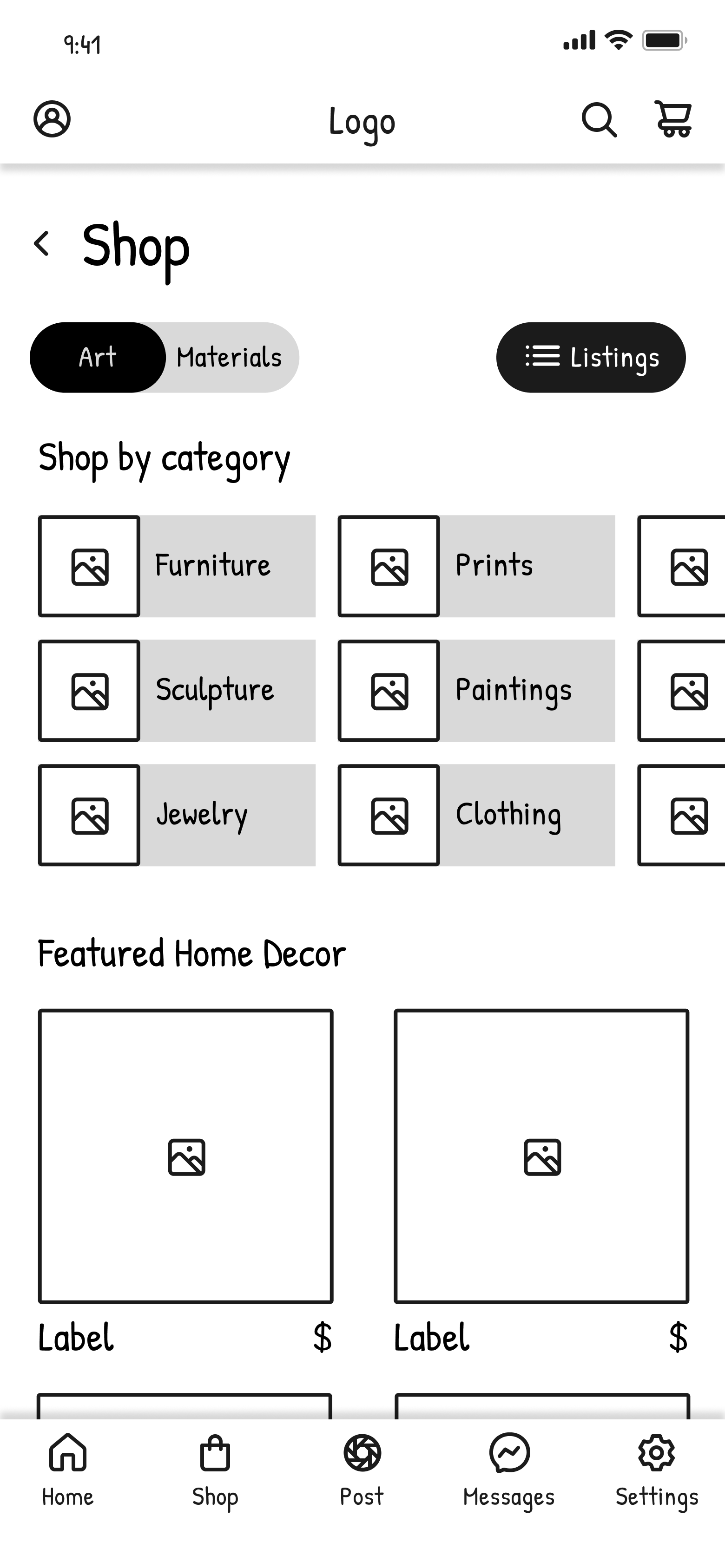
Listings is a tab where users post custom requests for artists to bid on.
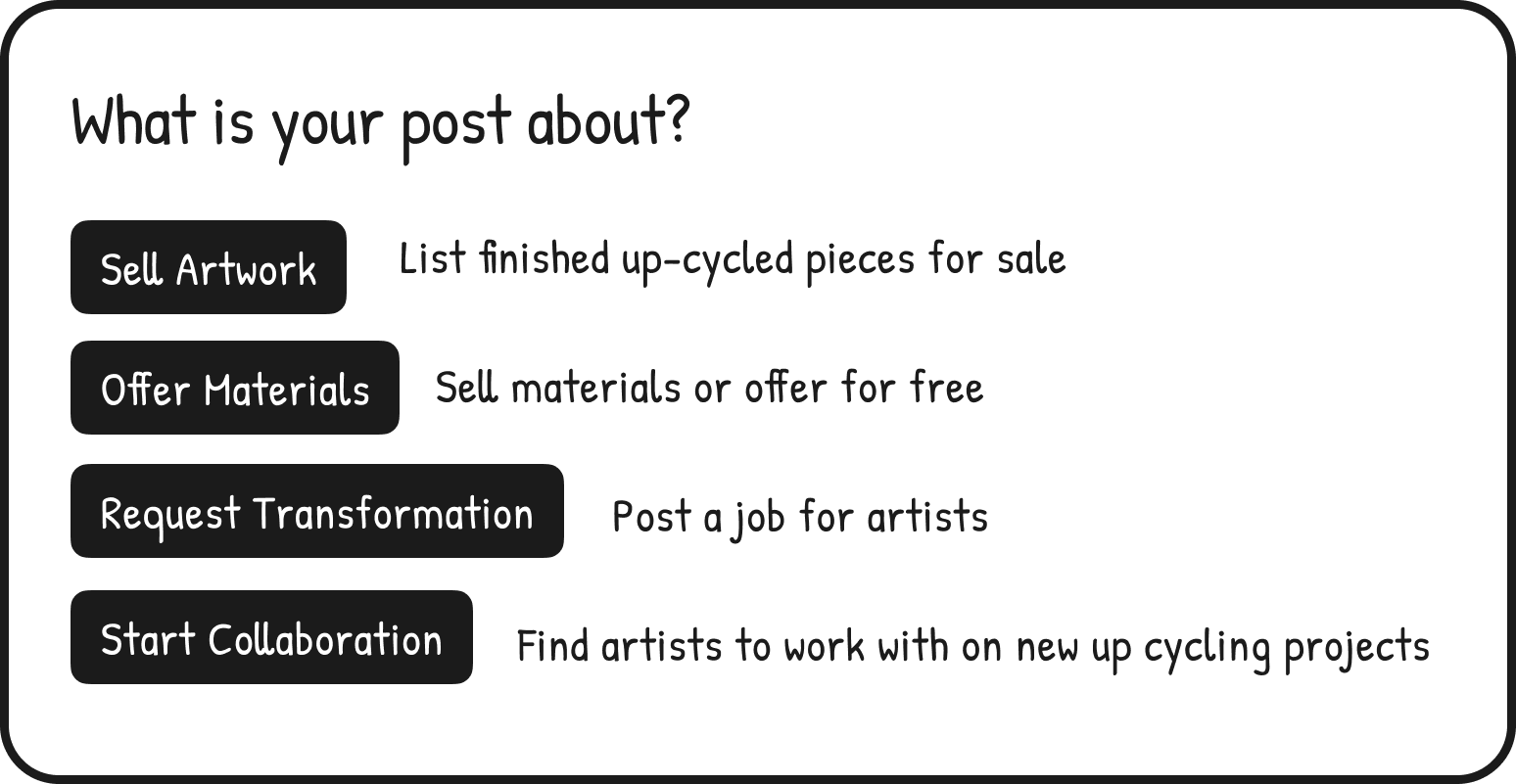
The toggle on the Post page wasn’t intuitive enough. To add clarity, we introduced a modal to direct users.
ADDING POLISH
Bringing everything together in higher resolution
With the primary focus of showcasing art, we used soft neutrals to create a gallery feel.
Read more about our branding
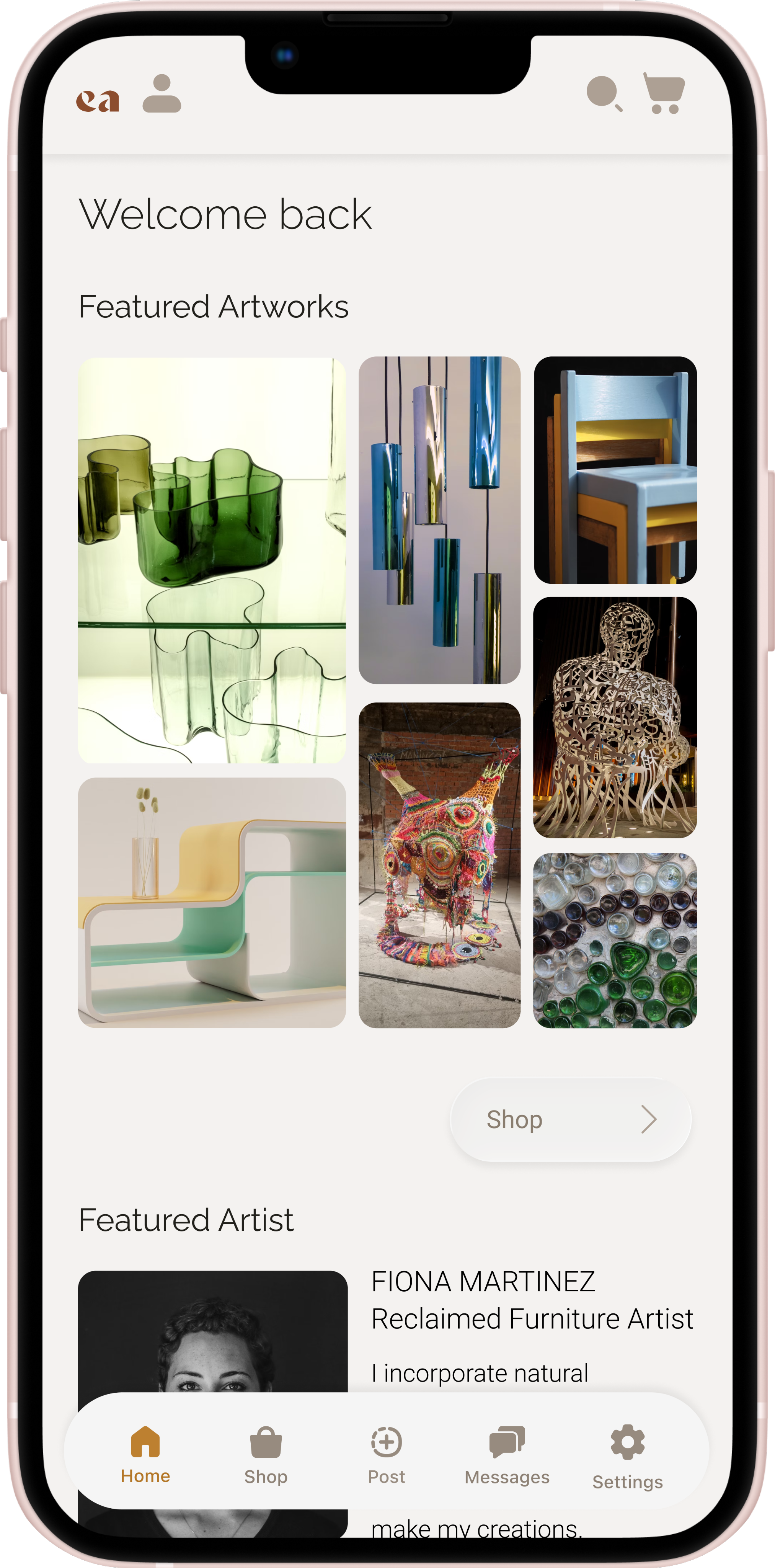
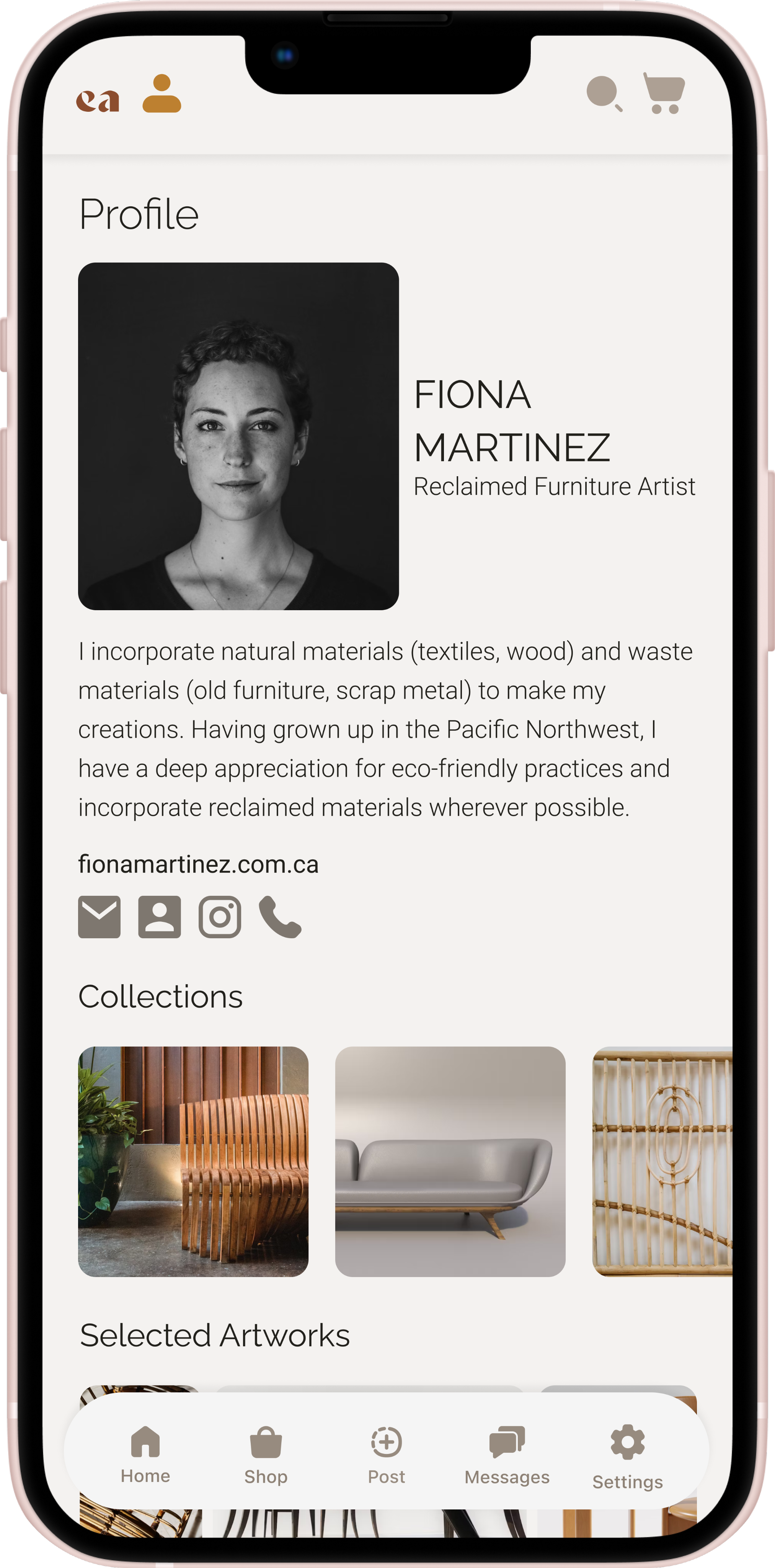
Here are the Landing (left) and Profile (right) pages.
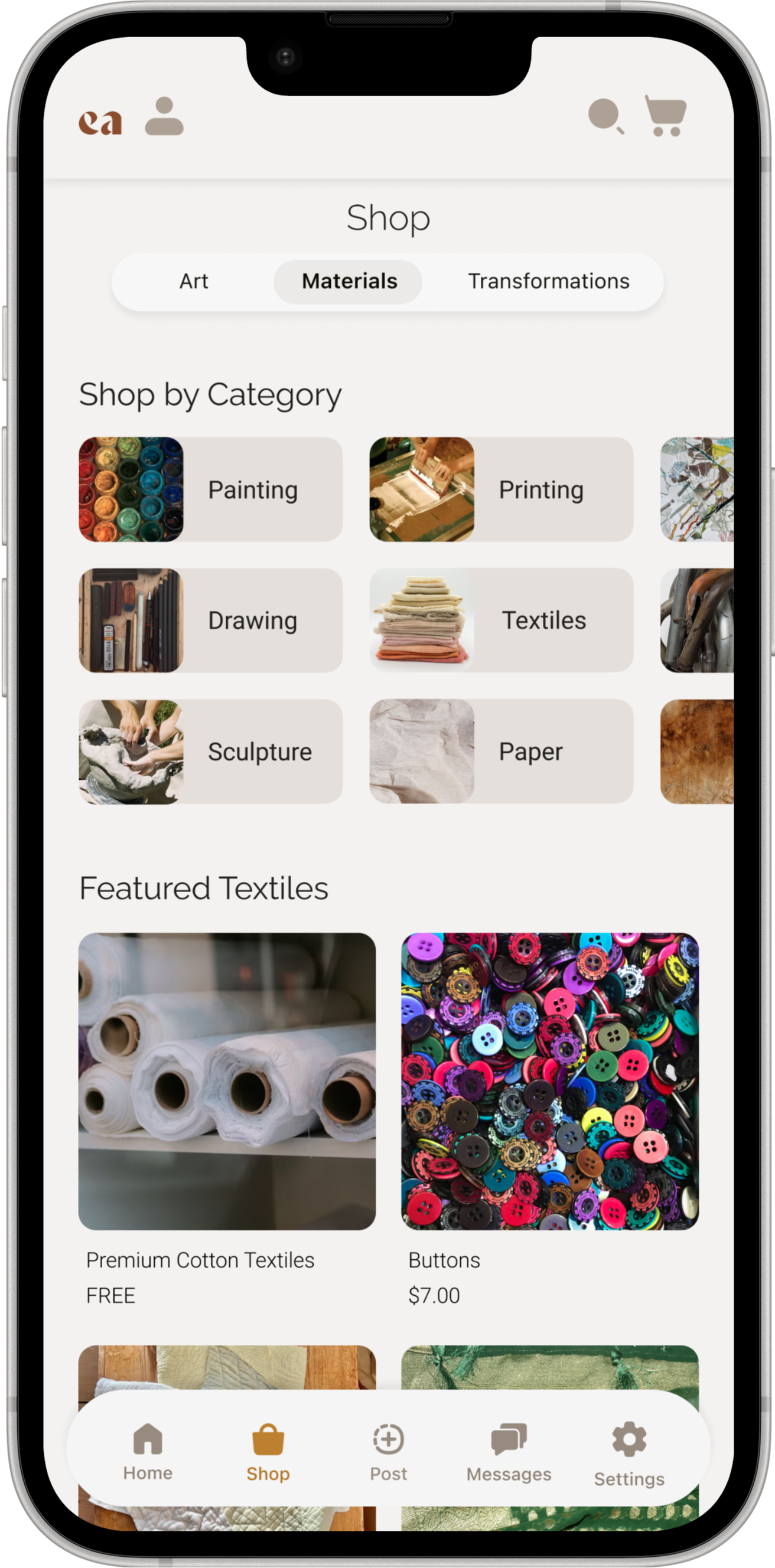
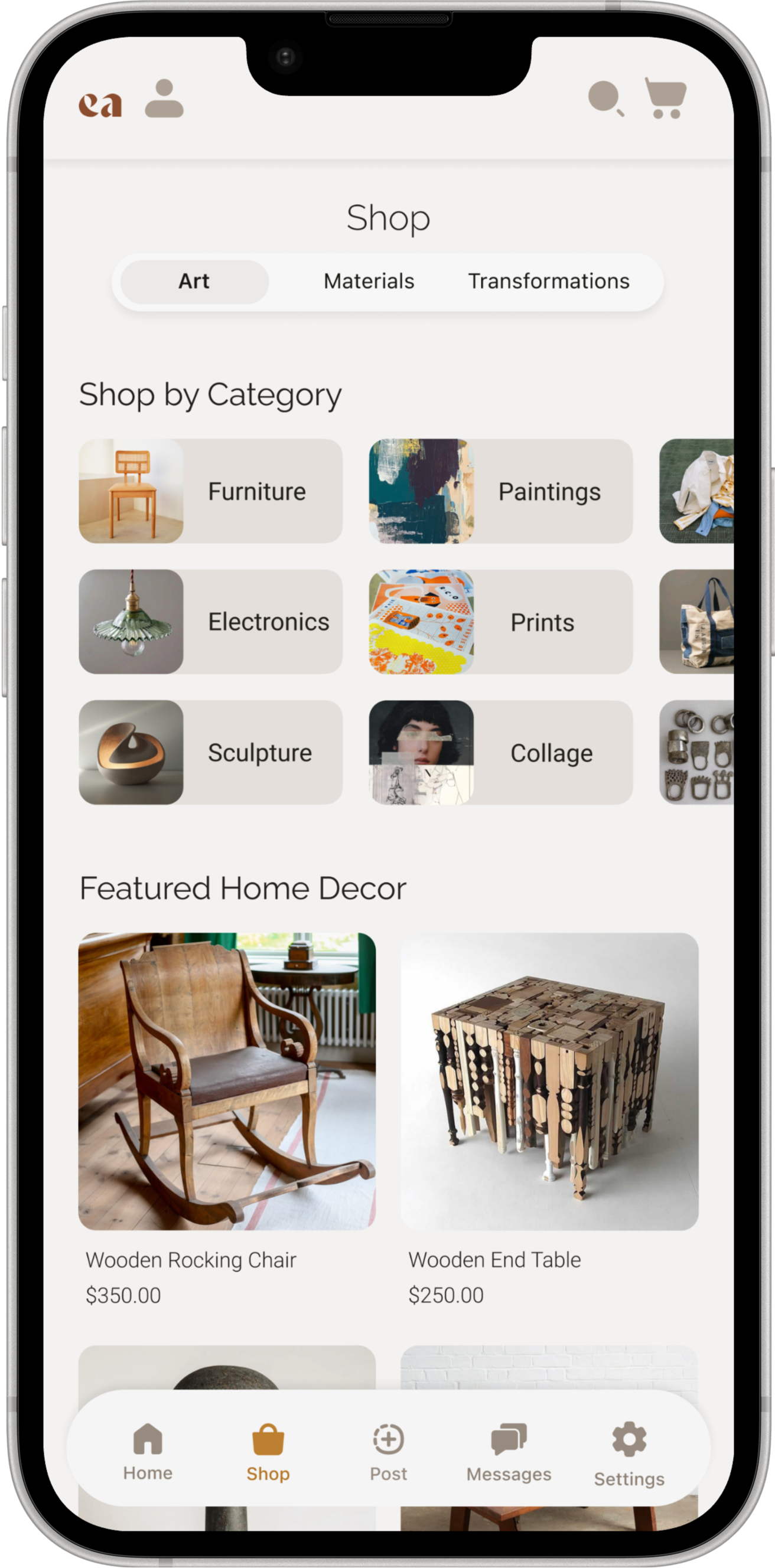
Shop now has a 3-way toggle:
- Art: where folks find art.
- Materials: where people trade, sell, and buy supplies.
- Transformations: where artists bid on custom jobs.
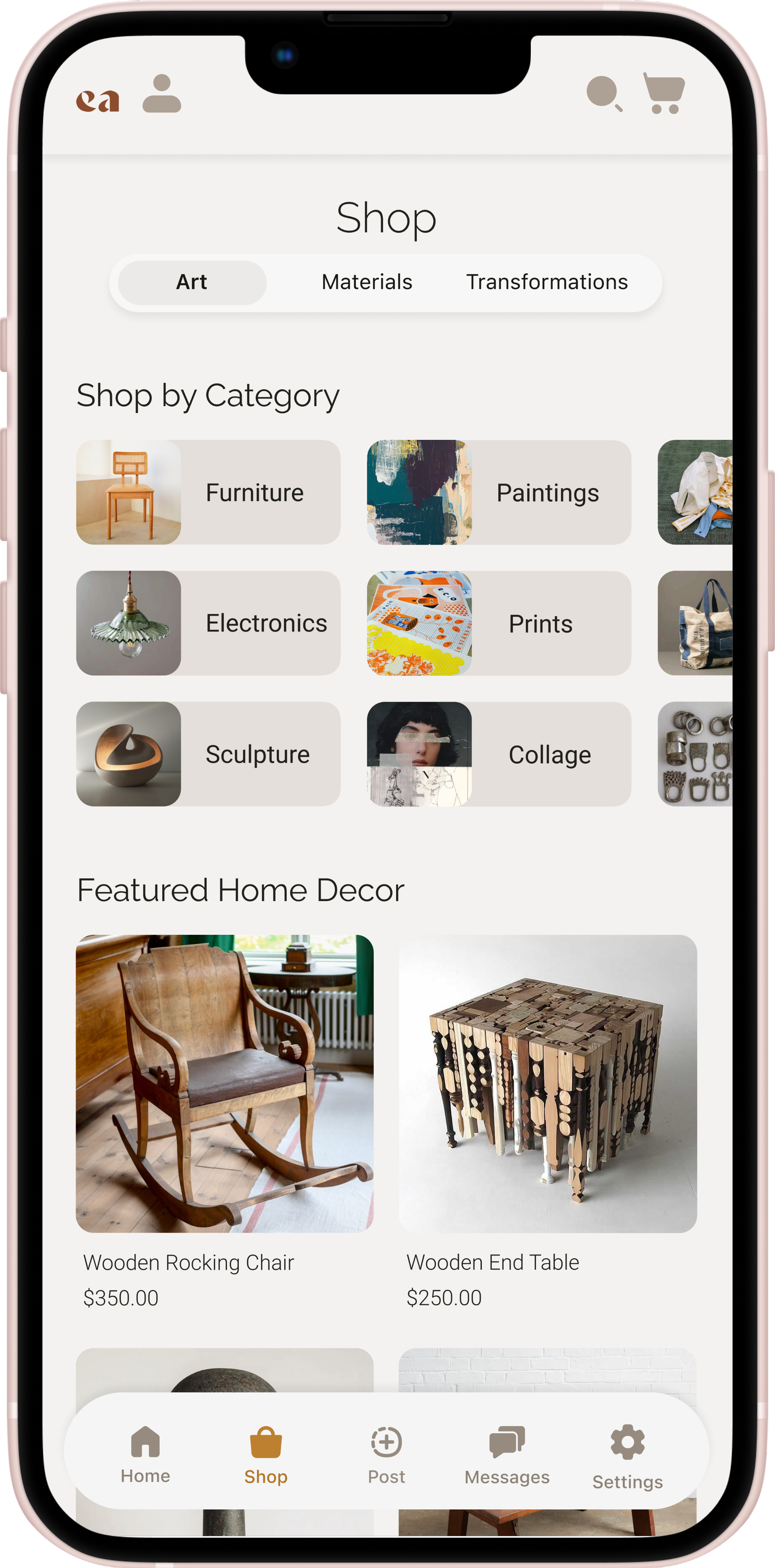
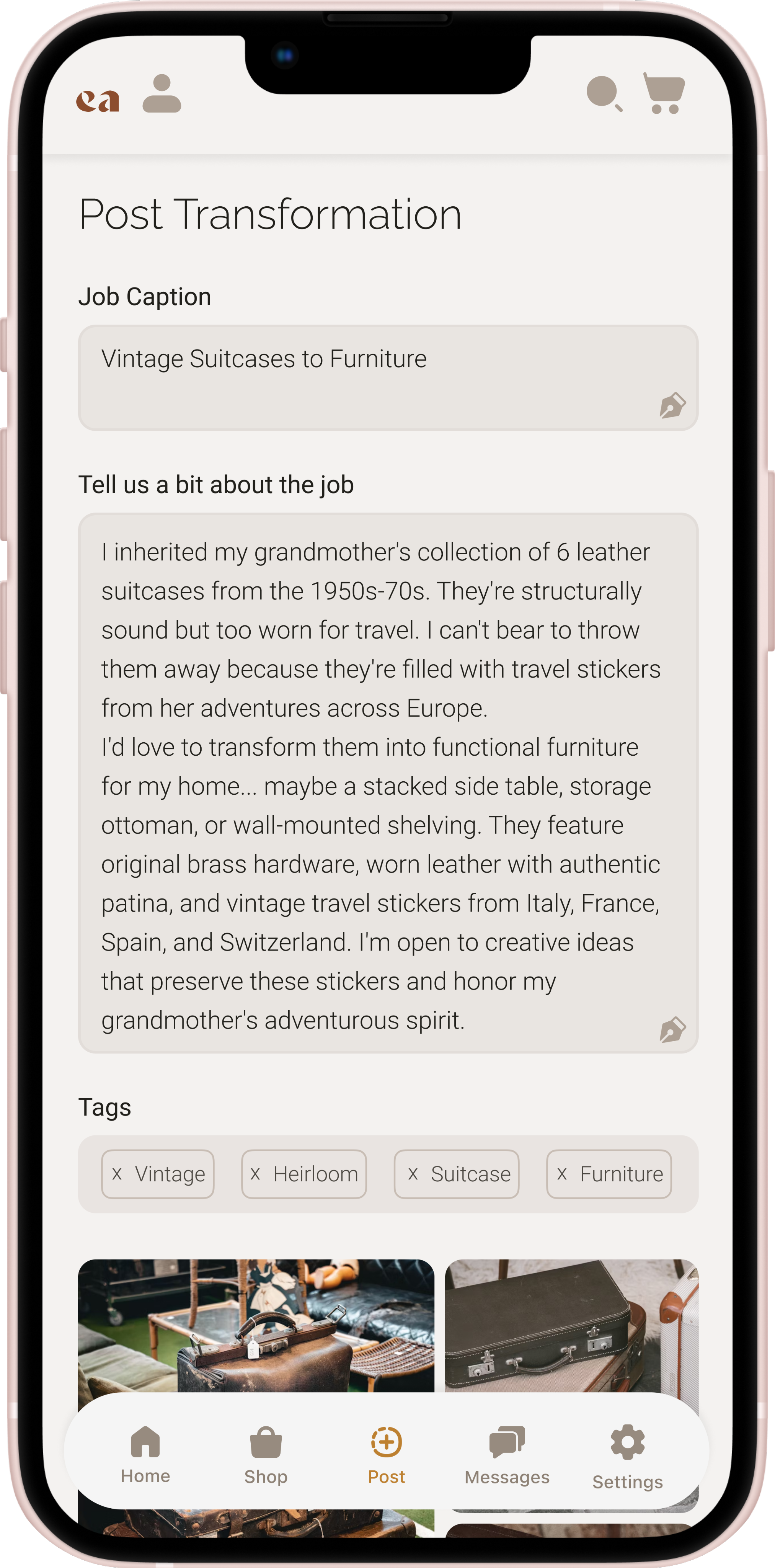
Here are the Shop (left) and Post Transformation (right) pages.
USER FEEDBACK
Making changes based on usability tests
What’s Working Well
- The UI. One user noted “[it’s] high quality, crafted, clean and spacious,” and that the app feels trustworthy.
- The task of Posting is “easy + straightforward.”
- The Preview page that allows users to view and edit prior to posting.
Areas for Improvement
- Adequate contrast. The translucency of Apple’s Liquid Glass plugin negatively impacts legibility in some cases.
- Buttons. Making the buttons larger and center-aligned would more accessible.
- Information order. It was suggested that adding photos should come first in the Posting process.
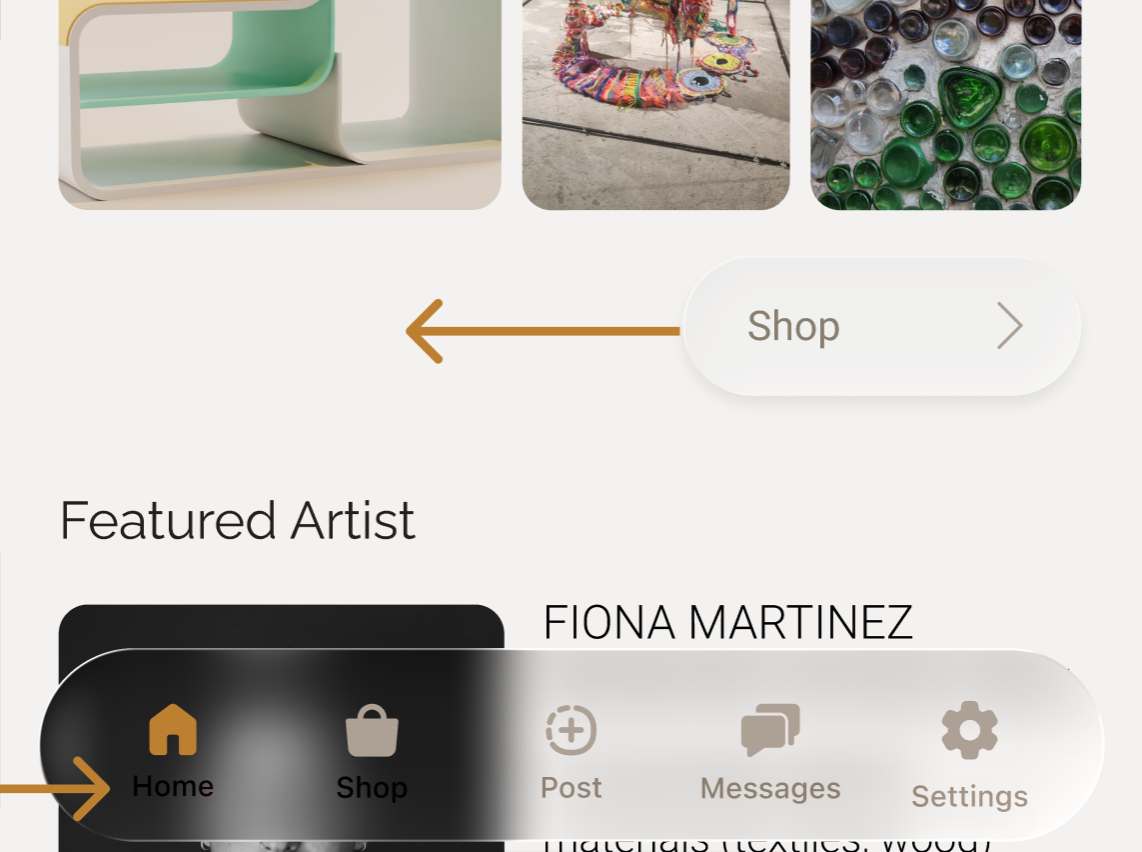
Before User Testing
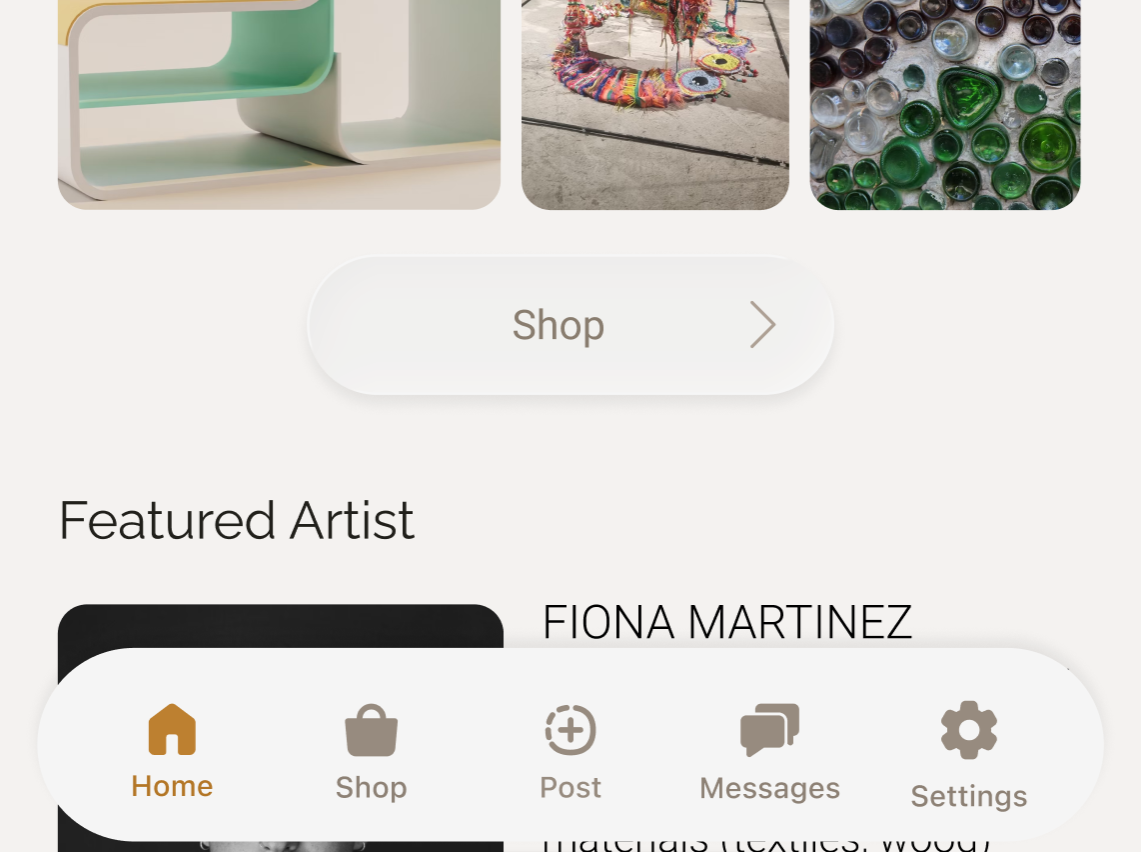
After User Testing
REFLECTIONS + NEXT STEPS
Moving forward
Reflecting on the research process, I’d want to dive deeper in understanding the marketing decisions and habits of artists. For example, I would ask more detailed survey questions around the dollar amounts artists spend on self-marketing. I would also create separate surveys for each of the three personas to gain deeper insight into the needs of buyers and material providers.
Additionally, I’d iterate based on initial feedback and send for further usability testing and explore MVP feasibility.

OTHER WORKS
Coming Soon
TBD
View Previous Project
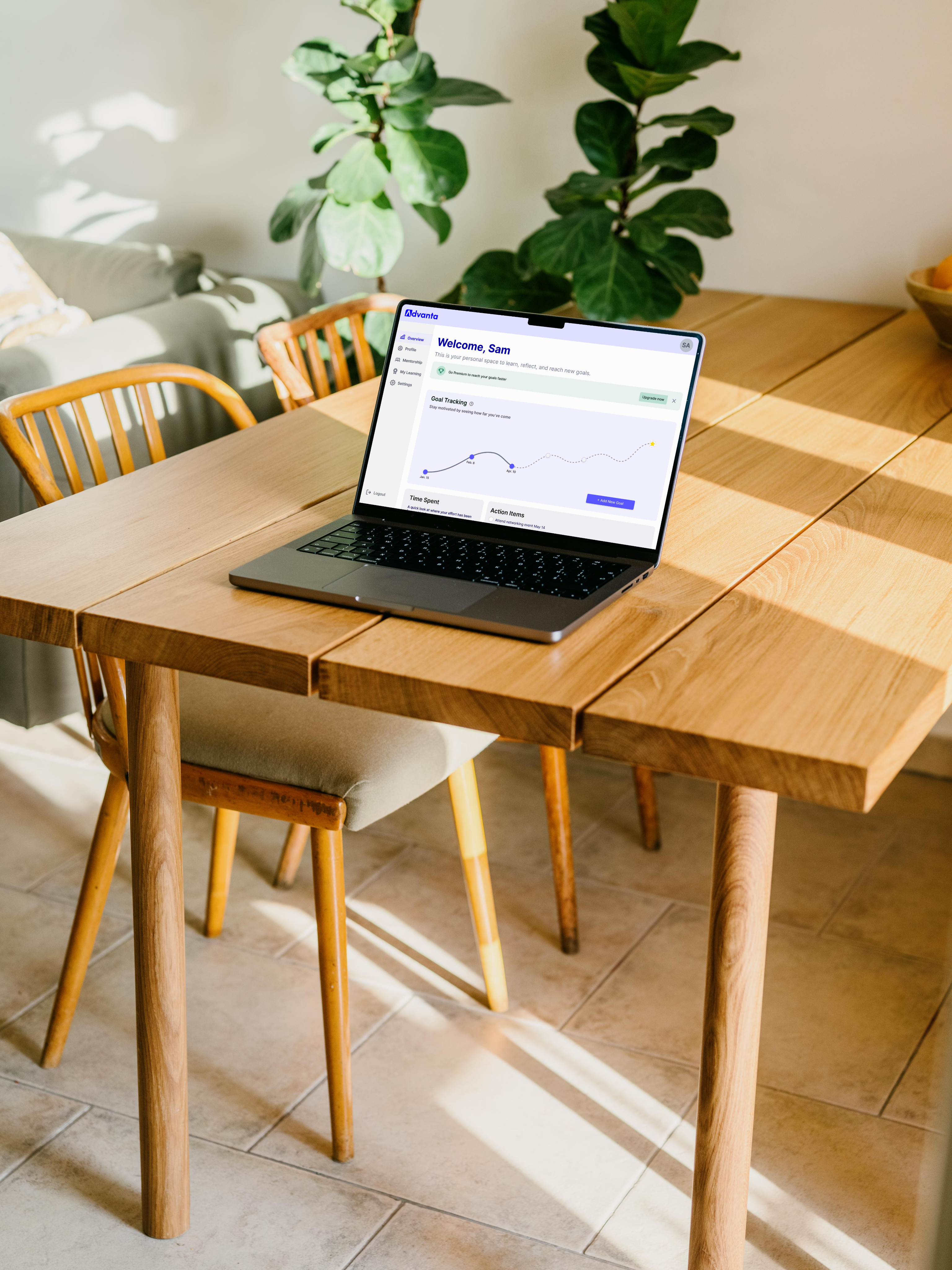
Uplifting First-Gen Professionals
Providing people with individualized guidance to level up in the workforce
View Next Project

Have a collaborative project idea or want to say hi?
elissa.dow@gmail.com | LinkedIn
© Copyright of Elissa Dow 2026

ECOARTISAN
Connecting Artists with Resources & Fighting Waste within One App
THE TEAM
I was the lead UX designer on this 13-week university project, focusing on flow and functionality.
Team MatesShrin Roymoulik [Team Lead] Emma Jenkins [UI Lead]
THE STATS
$135-195K est. first year revenue
PROBLEM #1
Many artists struggle to make ends meet
As creatives, we’re intimately aware of how tough it is to ‘make it’ as artists. In 2019, 57% of Canadian artists reported a total income of <$40,000.
One way to alleviate the financial burden is to connect artists with less expensive materials. This led us to the age-old idea: one person’s trash is another person’s treasure...
PROBLEM #2
Huge amounts of reusable materials are discarded daily
In 2022, 26.6 million tonnes of waste entered Canadian landfills. While not all trash is salvageable, we’re willing to bet that a not-insignificant percentage could be rerouted to artists.
How might we connect artists with people offloading unwanted items?
THE SOLUTION
A marketplace for sourcing and transforming unwanted materials into sellable art
Anything from old furniture, to textile off-cuts, to your grandmother’s button collection can be posted for artists to claim.
We looked at two existing buy-sell platforms, Facebook Marketplace and Craigslist, as well as e-commerce sites Threadless and RedBubble
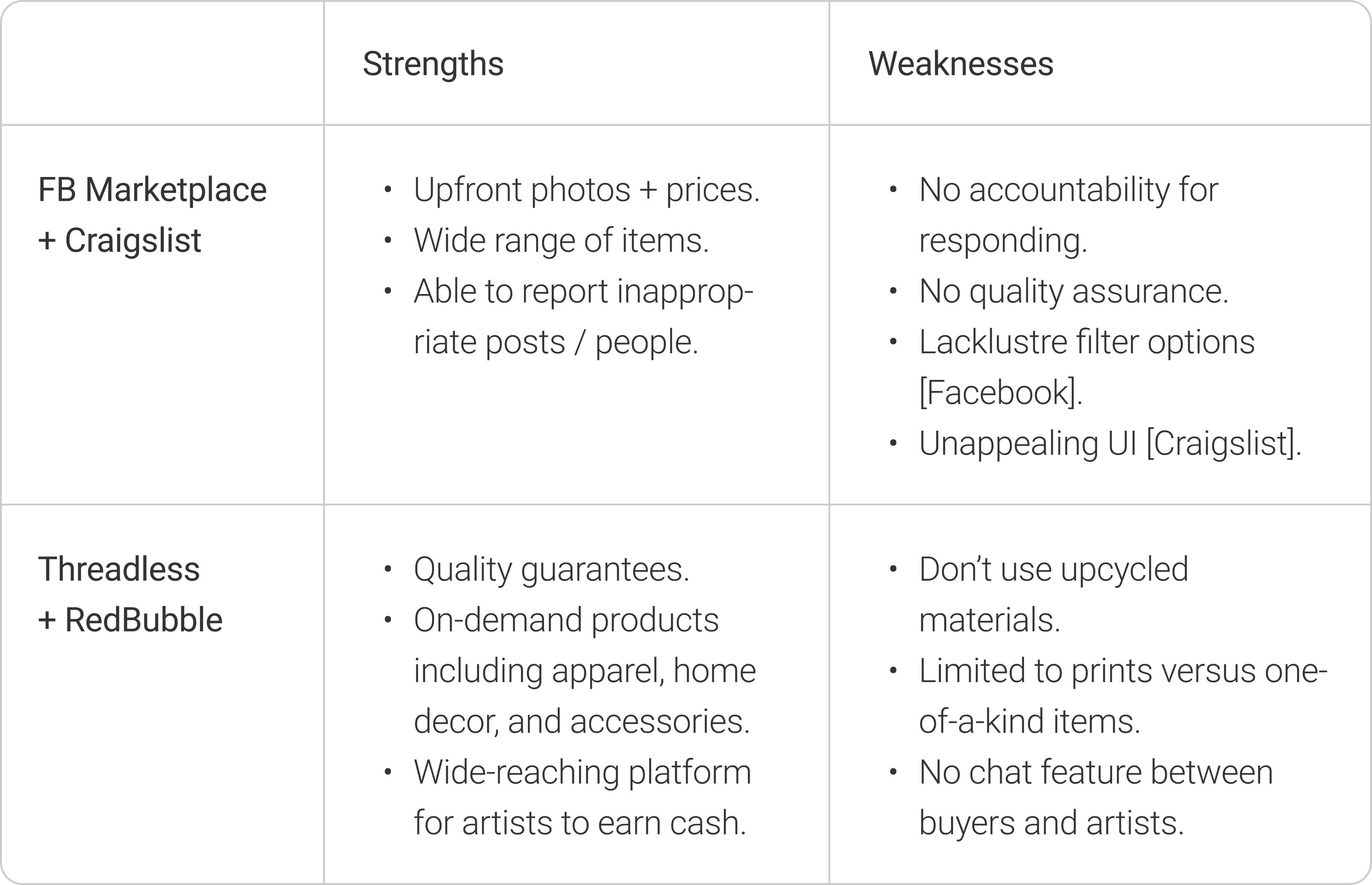
The Opportunity: No platform currently combines material exchange, artist discovery, and upcycled commerce in one ecosystem.
FIRST DEGREE RESEARCH
Artists need support with self-promotion and sourcing materials
We surveyed 19 artists and interviewed 10 independent creators who focus on repurposing materials.
Pain Points
- Sourcing quality materials.
- Difficulty growing their customer base.
- Low social media engagement.
Requested Features
- Artist profiles and honest buyer reviews.
- Local material exchange.
- Marketing support.
“Only 2-5% of my followers engage with posts. This creates a frustrating cycle where I spend hours creating social content that reaches minimal audiences... time that could be spent creating sellable work.” — Local Artist
There is a real need for artists to offload the time and effort they spend trying to grow their client base, and they need better access to reputable material sources. We want to help artists get back to what they do best.
FINANCIAL FEASIBILITY
More bang for artists’ buck than galleries offer
We want the app to be accessible; a freemium subscription lets anyone join, regardless of financial circumstance. Users can pay for unlimited posts with a premium subscription.
The commission charged is less expensive than gallery rates while still offering exposure.
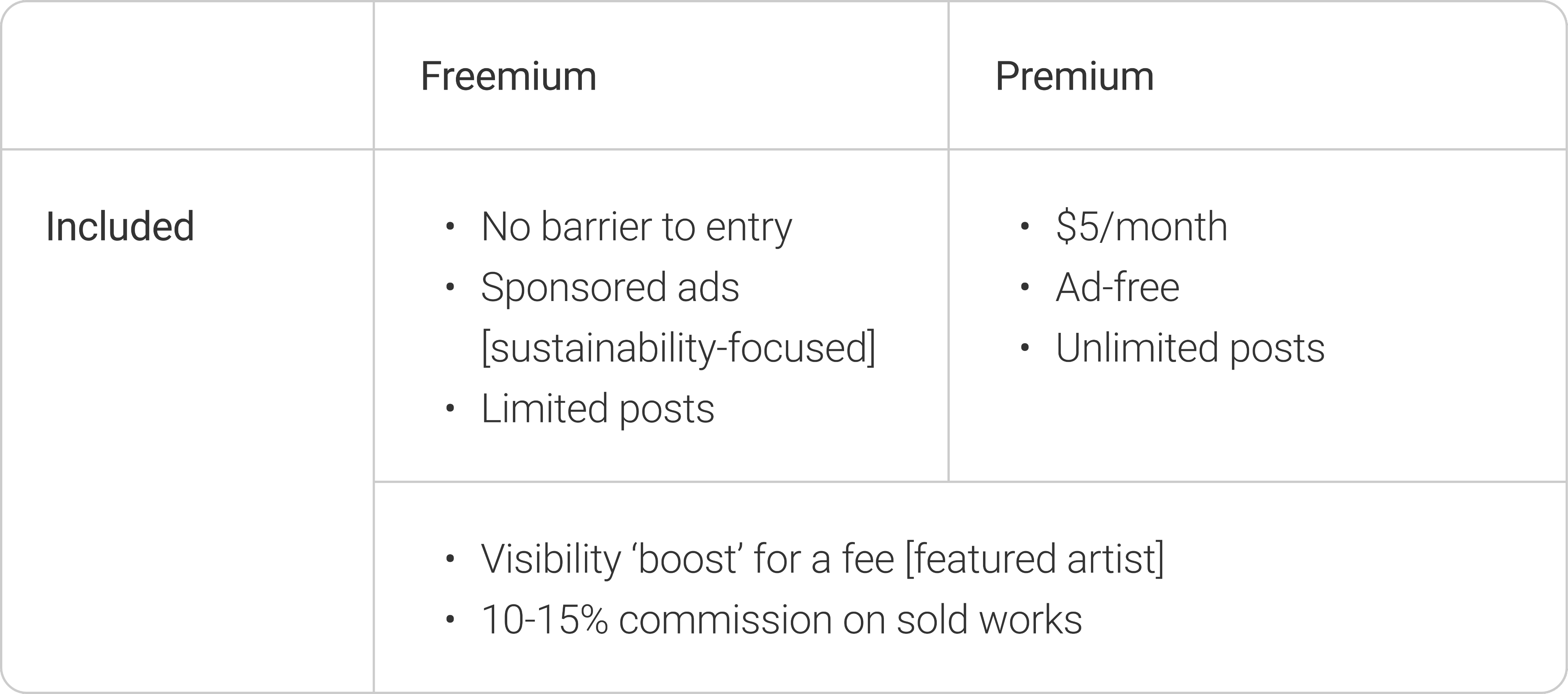
Estimated first year app earnings: $135,000 - $195,000
If there are 1,000 sign-ups in the first year, 500 of which are artists earning $200 monthly:
- 500 artists x $200 per month x 12 months = $1,200,000 total earnings
- EcoArtisan’s 10-15% commission:$1,200,000 x 10% = $120,000$1,200,000 x 15% = $180,000
- If a quarter of users pay for premium:250 users x $5 per month x 12 months = $15,000
THE DESIGN
Designing a quality experience for every user
There are three personas: artists, people offering materials, and people buying art.
Posting Art
Buying Art
Posting Materials
We first considered having users choose a persona during sign-up, however it quickly became clear that categories could easily blend between one another. It added unnecessary friction to separate users.
Post and Shop functions have to be accessible to every user.
Listings is a tab where users post custom requests for artists to bid on.
The toggle on the Post page wasn’t intuitive enough. To add clarity, we introduced a modal to direct users.
ADDING POLISH
Bringing everything together in higher resolution
With the primary focus of showcasing art, we used soft neutrals to create a gallery feel.
Read more about our branding
Here are the Landing (left) and Profile (right) pages.
Shop now has a 3-way toggle:
- Art: where folks find art.
- Materials: where people trade, sell, and buy supplies.
- Transformations: where artists bid on custom jobs.
Here are the Shop (left) and Post Transformation (right) pages.
USER FEEDBACK
Making changes based on usability tests
What’s Working Well
- The UI. One user noted “[it’s] high quality, crafted, clean and spacious,” and that the app feels trustworthy.
- The task of Posting is “easy + straightforward.”
- The Preview page that allows users to view and edit prior to posting.
Areas for Improvement
- Increased contrast. The translucency of Apple’s Liquid Glass plugin resulted in poor legibility.
- Button Visibility. Making buttons larger and center-aligned is more accessible.
- Reorder posting information. Adding photos should come first in the Posting process.
Before User Testing
After User Testing
REFLECTIONS + NEXT STEPS
Moving forward
Reflecting on the research process, I’d want to dive deeper in understanding the marketing decisions and habits of artists. For example, I would ask more detailed survey questions around the dollar amounts artists spend on self-marketing. I would also create separate surveys for each of the three personas to gain deeper insight into the needs of buyers and material providers.
Additionally, I’d iterate based on initial feedback and send for further usability testing and explore MVP feasibility.

OTHER WORKS
Coming Soon
TBD
View Previous Project
Uplifting First-Gen Professionals
Providing people with individualized guidance to level up in the workforce
View Next Project